"A girl was never ruined by books," my mother used to say. I've spent most of my life trying to prove that wrong.

Wednesday, January 29, 2014

Telegraph Avenue: The Best Novel I've Read in a While

Just this minute finished Michael Chabon's Telegraph Avenue--2:30 p.m., right in the middle of time I should be using for writing my own stuff, but I had to finish it.

This is probably the most engaging novel I've read in more than a year.  A multi-layered story, it has  a rather conventional plot:  couple of dreamers find their unsuccessful record store about to be overwhelmed by competition while their wives face problems, plying their trade as midwives.  Turns out one of the guys--the younger, African American one--has a 14 old son who shows up out of the blue.  The other--Jewish, with severe psychological problems--also has a son, who falls in love with other boy.  Along the way there are malpractice cases and "liberation" of a Zeppelin, as well as great riffs about music and life.

But it;s the journey that matters, and Chabon conveys us with splendor and  

It happens that I know a lot of the territory covered, and I remember another legendary record store on Telegraph Avenue, this one just across from the UC Berkeley campus.  That probably adds to the charm of the book for me, but I also was sometimes breathless at the images Chabon uses. One, both apt and hilarious,  chosen at random, about suburbs beyond the Oakland hill: " "Sprinklers chittered.  Titlesists traced white rainbows aginst the blue Contra Costa sky.  Along the forearms of hard-shopping women in tennis skirts, sunshine lit the bolden down." 

There are several loose ends, like the parrot named 58 who flies away after the death of his master.  The reason for the name is never given, although it seems that 58 sounds like "sure to prosper" in one dialect of Chinese.  On the other hand,  in Feng Shui numerology 58 means "no money." Does this mean hat the world is impossibly difficult to understand and basically contradictory?  Or are we just to take flight with the bird as it soars over 10 pages toward an improbable wild santuary?

Then there is the manner of a white guy assuming the voices of people of colour.  I haven't yet gone looking to see what kind of reviews the book received from those who might be upset by Chabon's appropriation of voice.   There are some, I imagine, who would be insulted by his audacity at trying to get inside the heads of his mixed-raee characters.  The voices sound good to me, just as good as his description of child birth.  The man is a good observer, for sure, and his soul is full empathy.

The photo, by the way, was taken almost 50 years ago during the Free Speech Movement: the crowd was marching off campus toward Telegraph Avenue.  Long time ago.


Thursday, January 23, 2014

Elephants in China? Yes, and Forests Too

Every once in a while you come across a book so original and thought-provoking that you make you gasp in admiration.  The Retreat of the Elephants: An Environmental History of China by Mark Elvin is such a book. 

It turned up when I was doing a search about the difficult relation between humans and forests over history as part of the research for my next non-fiction project, Road through Time.  A little time trolling library catalogues and data bases and I came up with a fascinating reading list that I'm currently working my through.  (Another good one is Deforesting the Earth, From Prehistory to Global Crisis: An Abridgement by Michael Williams, whose title has got to be an inside joke since it has 561 pages.)

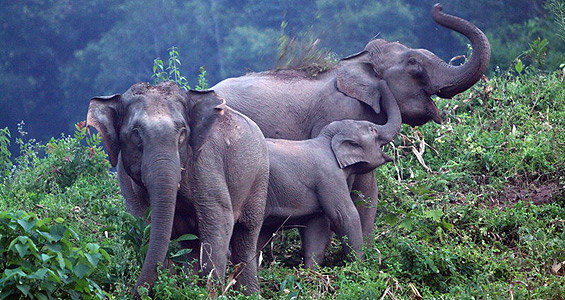
Elvin is from New Zealand, and perhaps that South Pacific vantage point has allowed him to write a history of the rise of intensive agriculture in China and the accompanying destruction of forests, water courses and grasslands.  He takes as his starting image the herds of elephants which five thousand years ago  roamed woods around Beijing--apparently there are many caches of the beasts' bones in that part of China.  The huge herbivores were hunted by the elite, but that was not what did them in.  Rather, they were the type of pachyderms which could not survive outside forests, and as the Chinese vigorously deforested the land, they retreated until now there are only a few left on the border with Myanmar.

What happened next, Elvin recounts with the same striking storyteller's skills.  What is more he quotes extensively from Chinese poetry to bring the rest of his history to life.  While it appears that he greatly regrets what the Chinese have done to their land over the last five thousand years, he also shows much sympathy for the reasons that lie behind their desire to make every inch productive.

I'm no Asian scholar so I can not critique either his sources or his analysis, but the 50 pages or so of notes and bibliography at the end of the book attest to Elvin's seriousness and his academic credentials.

If you are interested in either China or the environment or Chinese literature, this book is a must-read.

The picture, by the way, was taken in 2008 in a Chinese nature reserve and published on Aljazeera. 


Monday, January 20, 2014

Great Catalogues--But Bigger Type Please

Architecture without Architects by Bernard Rudofsky is sitting right beside me at the moment, ready for my next foray into the fascinating world of buildings made without formal plans usually by the people who will live or work in them.

Orginally the catlogue for an exhibition mounted in 1964, the book was republished in 1987, and still is worth tracking down.  I found it particularly interesting reading after spending some time reflecting on that architect-driven city, Brasília.

The constructions featured vary from cliff dwellings through ruins of ancient dried brick villages to rowhouses and arcades in modern Spain and Italy.  The overall impression os of organic growth, of spaces developed for uses that the builders understood well.  It is a refreshing change from the monumental scale of the Brazilian capital, and of the other grandiose projects for city centres.

My big quarrel with the book is one I have with many catalogues--the size of the print.  You must have good light to read the text, It is as if the pictures are so much more important that the publisher skimped on the space alloted to the very intersting explanations and elaborations.

The same problem arises with the most interesting catalogue to the recent exhibition of Peruvian art at the Musée des beaux arts de Montréal.  Peru, Kingdoms of the Sun and of the Moon.   I have had to put it aside more than once because my eyes couldn't focus one minute more on the undersized text.  Would have been worth paying an extra $5 or so to have a book which was easier to read.