"A girl was never ruined by books," my mother used to say. I've spent most of my life trying to prove that wrong.

Monday, September 30, 2013

Little Women's Dad: Geraldine Brooks on March

Ask me what book influenced my life the most, and I'll answer unhesitatingly: Lousia May Alcott's Little Women.  I got it for Christmas when I was in Grade Two, and began reading it immediately--but because I wasn't a very good reader it took me until April to finish it.

And then I re-read again.  And again.  And again.

Jo was my heroine for years, and the family's high-minded Abolitionist politics formed my own political conscience.  Alcott is responsible in a very direct manner for my participation in that famous March on Washington for Jobs and Freedom, held just over 50 years ago.

The resemblances between the Alcott's creation, the March family, and her own are clear, I learned from reading at least one biography of her.   But I hadn't thought too much about the backstory of Marches themselves.  Then I picked up Geraldine Brooks's March: A Novel because I liked her Caleb's Crossing so much. 

What a pleasure to read Brooks's imagining of the adult world behind Little Women and the difficult moral choices the Marches made!

The book is told in two voices. One is John March, a Yankee preacher who had made a fortune as a pedlar in the South, to return north and become a militant opponent of slavery.  Marrying a young woman even more passionate than he, he supports John Brown's rebellion, gives all his money to the Abolitionist, tries to raise four daughters in reduced circumstances, and then volunteers as a chaplain to the Union forces once the Civil War begins. The other is of his wife, Marmee, who comes to his bedside in Washington when he is wounded.

That much any reader of Little Women already will know: the book opens with Mr. March away in the War, and ends with his return a year later.  What Brooks imagines is his conflict over going, his repulsion at the killing, his tortured attempts to reconcile his "cowardice" with very natural instincts to save himself, and his desire for both his wife and a young slave woman whom he met when he was young.

She also shows us Marmee's conflict, her realization that she should have, could have insisted he remain behind--he was 41 after all--and her sense of betrayal that he had given his fortune away without consulting her while keeping his brief affairs with another woman a secret from her all these years.

The tone appears to me to be spot on, Brooke's research is extensive, and the moral dilemmas her characters face,  truly thought-provoking.  The book won the Pultizer Prize in 2005: the judges that year  were spot-on.

The images are of Alcott and Brooks.


Wednesday, September 25, 2013

Books about Book Clubs and Book Discussions

 Maybe it's because book clubs and book discussions are such a part of my life that I find books that use one as an occasion to present another agenda rather annoying. 

My original group--now going for more than 40 years--discussed The End of Your Life Book Club by Will Schwalbe last night.  It is the account of the 18 months his mother Mary Anne Schwalbe took to die of pancreatic cancer, and the books that the two of them read and discussed while she was in treatment.

I didn't know what to expect.  Two previous book club books,
And the Ladies of the Club  by Helen Santmyer and Reading Lolita in Tehran by Azar Nafisi, had been deeply disappointed.  The first was more than 1000 page long and detailed a group of women who met to discuss books for about 60 years: far to long to be arresting, I thought.  The second, about a group of young women who meet with their English prof during the worst part of the Islamist revolution in Iran and discuss forbidden books like Lolita, had more than I cared to read about the books themselves: I kept thinking I should reread the originals myself and see what I thought.

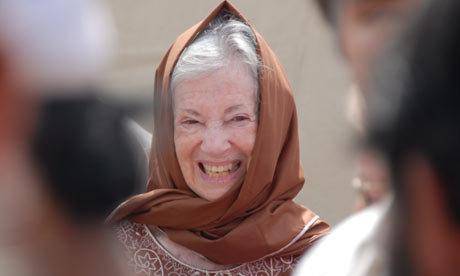
The Schwalbe book is as much a tribute to the courage and good humour of the author's mother (that's her shortly before she was diagnosed with cancer when she was in her mid-70s) than it is about the books.  This time I think I would have liked to hear more about what they thought about the books and less about how gritty she was. 

And perhaps, I must confess, I didn't want to be seduced into reading about approaching death.  When you get to be my age, your parents are dead and your friends have begun to fall by the wayside.  Books may be useful in dealing with these losses and in guiding you and others in that long last walk. 

But, damn it,  I just renewed my passport for 10 years because I want to take another sort of trip (more about that later.)  Like Scarlett O'Hara, I'll think about all that other stuff tomorrow.


Thursday, September 19, 2013

Why Do We Tell Stories? To Make Sense of the World?

The long list for Canada's biggest fiction prize, the Scotia Bank Giller, was announced a few day ago, and it looks like the heavy money is on Joseph Boyden's  The Orenda, which focuses on the clash of cultures between First Nations and Jesuit missionaries in 17th-century Huronia.  Haven't read it, but it appears to be the back story in effect, for his two previous novels about Canadian First Nation people,  Three Day Road and Through Black Spruce.  

Those two books provide not only good story telling but also window on to the world of the people who were in Canada before Europeans arrived, and what they became afterwards. As such these novels demonstrate, I think, the role that the book plays in the continued health of civilization because stories are important tools in making sense of the world. (The image of Tom Thomson's Forest, 1916, when Boyden's people were losing their forests.)

One of the striking things bout Roberto Bolaño’s astounding By Night in Chile is the way the narrator escapes from the evil abroad during the Pinochet regime in Chile by re-reading philosophers.

In Bernhard Schlink’s The Reader, the illiterate woman whom the narrator loves is captivated by books, and may be said to find her personal salvation in learning how to read and learning to repent for what she’d done as a Nazi guard.

InMuriel Barbery’s The Elegance of the Hedgehog the concierge Renée soars above her surroundings by reading the classics of Western literature—as well as watching a lot of good films (from Blade Runner to Ozu’s artistic wonders) and listening to good music.

But it was a recent discussion of Mister Pip by Lloyd Jones that gives me the most food for thought. In it, the one white man left on the island of Bougainville during a time of intense suffering and civil war reads Charles Dickens’ Great Expectations to children who have no other book. The story captivates them, and when the book is burnt along wit the village, they attempt to retrieve bits of it, as both an exercise in survival and a way of thinking about other things than the destruction around them. Yet at the end of the book we learn that the version Mr. Watts read was not the real one, but a simplified, maybe even crudely changed one.

The moral (if any) is: If we don’t have a story, we’ll invent one.

BTW here's an interesting look at the background to Mister Pip,  a documentary made in the 1990s about the troubles on Bougainville.The clash of cultures has quite a bit in common with what Boyden writes about.